Elías's Mobile Phone
Operation NapoleonElías's Mobile Phone is the communication device that connects Elías to his sister Kristín, exposes her identity and address to Ratoff, and ultimately guides rescuers to Elías and Jóhann after Ratoff throws it into a crevasse. Its significance lies in that reversal: a tool Elías uses to stay in touch becomes a means of surveillance, then—after being discarded as part of an attempted cover-up—a signal that helps undo the concealment.
Design and First Use
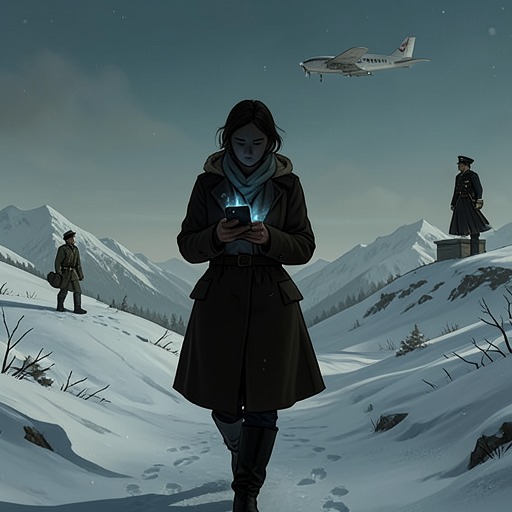
Elías introduces the phone while travelling with a team bound for Vatnajökull Glacier in winter. From just outside Akureyri, he calls Kristín, tells her where the team is headed, and says they expect to reach the glacier the following day. He plans to call again on arrival. The phone therefore carries information about both his location and the team's movements, and makes his journey feel close enough for an ongoing conversation despite the distance.
Elías is especially interested in how well the call comes through. He asks Kristín whether the sound is clear and explains that the phone cost seventy thousand krónur because it has NMT's long-distance communication system. His practical pride in its reach contrasts with Kristín's bewilderment at his technical explanation. To Elías, the phone's capacity matters because it lets him stay connected from a remote winter expedition; he treats the device as an ordinary means of contact, not as something that might expose him or his family to danger.
That first exchange also gives the phone a role in their sibling relationship. Kristín urges Elías to remain with the others and not attempt anything alone. Her concern travels through the same device that gives him the freedom to call from far away. Later, when she tries to reach him on the glacier and gets no answer, the phone's silence replaces that reassuring connection. She hears faint breathing on the line and suspects it might be Runólfur, but cannot establish who is there or what has happened. The phone can carry a voice across distance; it cannot make the person at the other end safe or identifiable.
From Contact to Surveillance
After Ratoff obtains the phone from Elías, he checks the number most recently dialled. The call has lasted long enough, he thinks, for Elías to have described the area and the team's activities in detail. The screen shows only one number, and the phone appears new and barely used. Those details make the device unusually legible to its captor: there is little history to obscure the recent call, and that call points toward the person Elías has contacted.
Ratoff orders the communications officer to have the embassy trace the number. The result identifies it as a Reykjavík number registered to Kristín, whose patronymic matches the phone's owner. The officer suggests she may be Elías's sister and supplies her address. Thus the phone's long-distance system, valued by Elías as a way to reach home, also gives Ratoff a route from a captured device to Kristín's identity and residence. The device does not itself disclose the whole family story, but it directs Ratoff toward the person whose connection to Elías he can exploit.
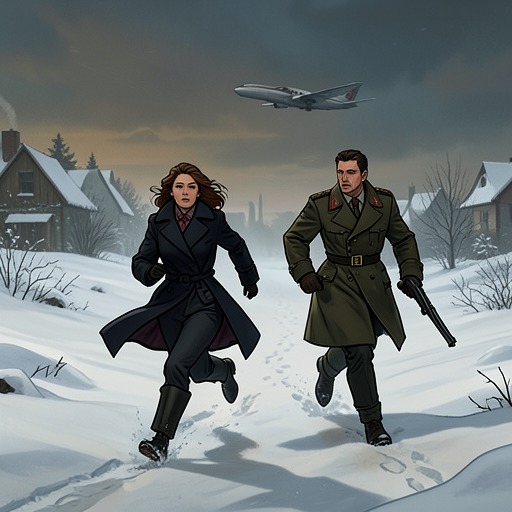
When Ratoff's soldiers intercept Elías and Jóhann, they find the phone on Elías; Jóhann has no phone or other transmitter. The contrast makes the device an identifying possession as well as a communication tool. It is the reason Ratoff can inspect Elías's recent contact and follow the trail to Kristín. Under interrogation, Elías gives Ratoff information about his sister, her friends and colleagues, their father, and other parts of the family history. The phone's initial call has therefore helped set in motion a chain in which private family knowledge becomes intelligence for the armed operation.
Discarded in the Crevasse
After Elías and Jóhann fall into the crevasse, Ratoff orders his soldiers to push their snowmobiles into it and erase the tracks. He then drops Elías's phone into the fissure after him. In the immediate scene, the phone is treated as something to dispose of along with the evidence of the soldiers' presence. The action appears to extend the attempt to make the fall look like an accident: the snowmobiles and tracks are removed, and the phone is put beyond sight with the injured men.
But the phone does not become inert simply because Ratoff has discarded it. Thirty-five miles away, members of the Reykjavík Rescue Team hear a mobile phone ringing faintly from the blue depths of a jagged fissure. They have followed the snowmobile tracks, noticed where the trail turned toward a belt of crevasses, and then pinpointed the phone signal from their camp. The signal helps them identify the chasm where the men lie. A rescuer descends on a rope; the team then brings up the snowmobiles and raises Elías and Jóhann on stretchers with care.
Narrative Function
The phone's changing use gives it a compact but consequential path through the episode. It begins as an expensive object Elías is pleased to use, carrying a brother's check-in from the edge of a remote expedition. In Ratoff's hands, its call history becomes a lead to Kristín. In the crevasse, where Ratoff intends it to disappear, its signal becomes a practical guide for the rescuers. The object passes from communication to exposure to evidence, with each change arising from a concrete action rather than from any change in its technology.
Its return to usefulness is also an irony of the concealment attempt. Ratoff has the phone thrown away after making Elías surrender information, and tries to hide the men and their machines beneath the ice. Yet the phone's ringing carries beyond the fissure, and the signal that once connected Elías to his sister now helps other people find him. It cannot undo the violence or guarantee recovery, but it makes the attempted erasure incomplete: the discarded device remains detectable, and its presence leads the rescue team to the place Ratoff wanted hidden.